Imagen

Torrevieja, pilot municipality of the healthy leisure project with IREFREA (European Institute for Prevention Studies)
The City Council is bringing together municipal officials, healthcare professionals, and social organizations to begin implementing a community prevention model based on scientific evidence.
27.07.2026
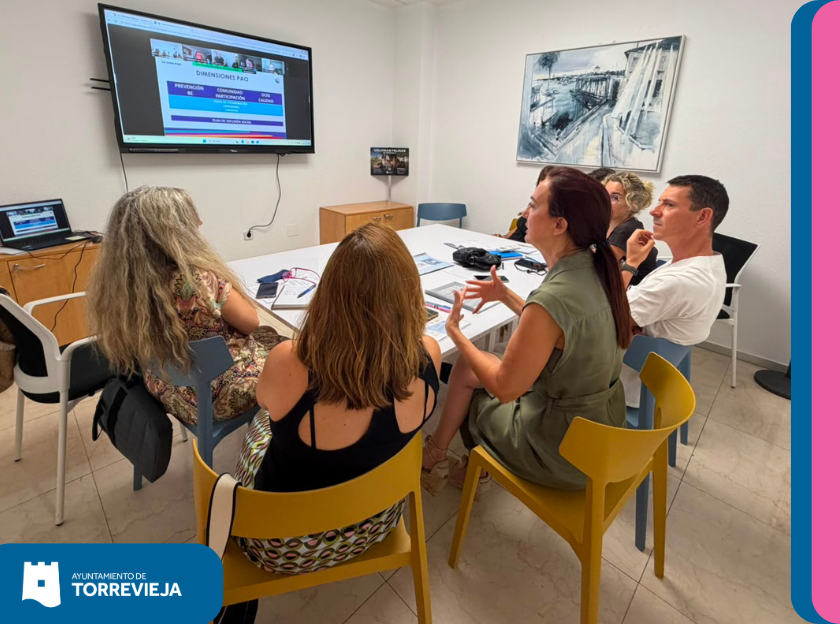
Last week, the first multidisciplinary working meeting took place between the Torrevieja City Council and IREFREA (European Institute for Prevention Studies), on the occasion of the incorporation of our municipality as a pilot in the implementation of the Healthy Leisure Promotion (PAO) model.
This meeting was attended by the Councillor for Public Health, UPCCA and Consumer Affairs, Rosa Cañón; the Councillor for Sports and Health, Diana Box; the Councillor for Social Welfare and Families, Óscar Urtasun; the Councillor for NGOs and Citizen Participation, Trudy Páez; representatives from IREFREA: Mª Ángels Duch, Coordinator of European projects and Montserrat Juan Jerez, Director, as well as technical professionals from different municipal departments — UPCA Public Health, Social Welfare, Equality, Youth, Education, Sports, Local Police —, in addition to representatives from the health centers (Nursing, Family Medicine, Social Workers) of the Torrevieja University Hospital and social entities such as APAEX and ADIEM, among others.
During the meeting, the PAO model (Promotion of Healthy Leisure) was presented, a methodology based on scientific evidence that promotes community participation, networking and collaboration between administrations, entities and citizens to foster quality leisure as a prevention tool, especially among children and young people, and the main lines of action for the coming months were defined.
The Department of Public Health highlights that Torrevieja's inclusion in this project as a pilot municipality represents support and an opportunity to further strengthen municipal prevention policies in the field of addictions, which are being carried out by the UPCCA technicians.
In this way, together with families, educational centers, social entities and the rest of the agents involved, progress will be made in a healthy leisure model that contributes to the well-being of our children, adolescents and young people and strengthens the health of the entire community.