Imagen

The new municipal housing office brings rental assistance and information on public housing closer to residents.
The Torrevieja City Council has invested 199,423 euros in the renovation of these premises, located on Calle Caballero de Rodas, at the corner of Clemente Gosálvez.
15.10.2026
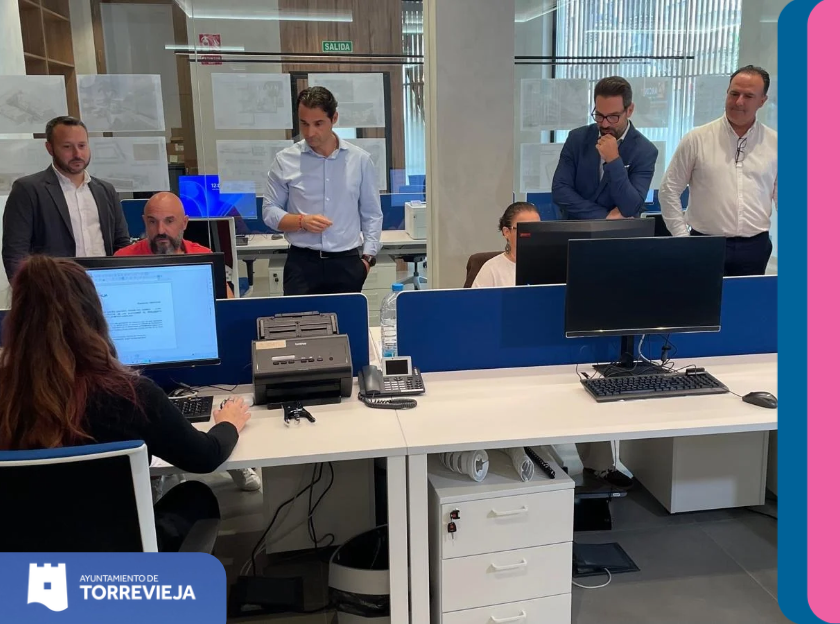
One of the main functions of the office will be to assist potential beneficiaries of the new municipal rental assistance for young people, a measure committed to by the government team for this term.
The Torrevieja City Council today opened its new Municipal Housing Office, a space dedicated to providing citizens with information, guidance, and advice on accessing housing. Its opening addresses a particularly pressing need at this time and will bring municipal resources and services in this area closer to residents.
The mayor of Torrevieja, Eduardo Dolón, accompanied by the councilor for Housing, Óscar Urtasun, the councilor for Heritage, Domingo Paredes, and the councilor for Public Road Occupation, Federico Alarcón, visited this morning the new facilities, located on Calle Caballero de Rodas, corner of Clemente Gosálvez, whose rehabilitation has involved a municipal investment of 199,423 euros (VAT included).
The new office is designed as a central hub for residents who need information on the various public housing developments offered by the Torrevieja City Council, rental subsidies, and other matters related to accessing housing. This service will provide direct and organized assistance to guide residents and facilitate their paperwork.
NEW FACILITIES FOR HOUSING AND HERITAGE
The facilities have undergone a complete renovation and offer 19 workstations, meeting rooms, and dedicated public service areas in an accessible and functional environment. At the time of opening, the Housing department has two staff members, while the Heritage department has nine.
The relocation of the municipal Heritage department to these premises allows its staff to have larger and more suitable spaces, improves internal organization and facilitates the performance of its administrative functions.
With the opening of this office, the Torrevieja City Council is strengthening citizen services in housing matters and expanding municipal resources to assist residents with their inquiries and procedures.
INFORMATION AND PROCESSING OF RENTAL AID FOR YOUNG PEOPLE
One of the main functions of the office will be to assist potential beneficiaries of the new municipal rental assistance for young people, a measure committed to by the Government team for this year.
The City Council plans to announce this line of subsidies before the end of the year, with the aim of helping to cover rental expenses for the year 2026 and promoting access to and maintenance of housing among the young population of the municipality.
The office will be one of the information and processing points for these grants, where guidance will be offered on the requirements and conditions of the call and the submission of applications will be facilitated once it is launched.
The opening of these offices is part of the municipal plan to expand and adapt workspaces to improve service to citizens. In addition to the new Housing and Heritage offices, the Torrevieja City Council has renovated the premises housing the Public Health and Health Prevention departments and the UPPCA (Unit for the Prevention and Care of Addictions), which are located next to these offices, and has established a new location for the Public Space Occupancy Office, situated opposite, for which the municipality has invested €50,000.
These actions are in response to the increase in jobs that the governing team has been implementing in various municipal departments in recent years. The aim is to complement this increased staffing with suitable, accessible, and functional facilities that will improve the organization of services and provide more efficient and personalized service to residents.
CREATION OF THE FUTURE ADMINISTRATIVE CITY
In parallel, the Heritage Department is conducting a study with the Polytechnic University of Madrid for the creation of the future Administrative City. This project pays particular attention to the old City Hall and proposes connecting the buildings that make up the current City Hall complex, with the plan to gradually relocate the municipal departments to this complex in the coming years.
As part of this project, specialists from the Polytechnic University of Madrid have analyzed the possibilities for connecting buildings, reorganizing their uses, and exploring alternatives to improve their internal functioning. With this planning, the City Council aims to organize the municipal real estate holdings in the vicinity of the City Hall and move towards a more coordinated administration, with spaces that meet the needs of both public employees and citizens.