Imagen

Torrevieja awards the contract for the implementation of the low emission zone with an investment of 1,189,213 euros financed with European funds
The project will transform urban mobility, improve air quality, and modernize traffic control in the city center and its surroundings.
15.05.2026
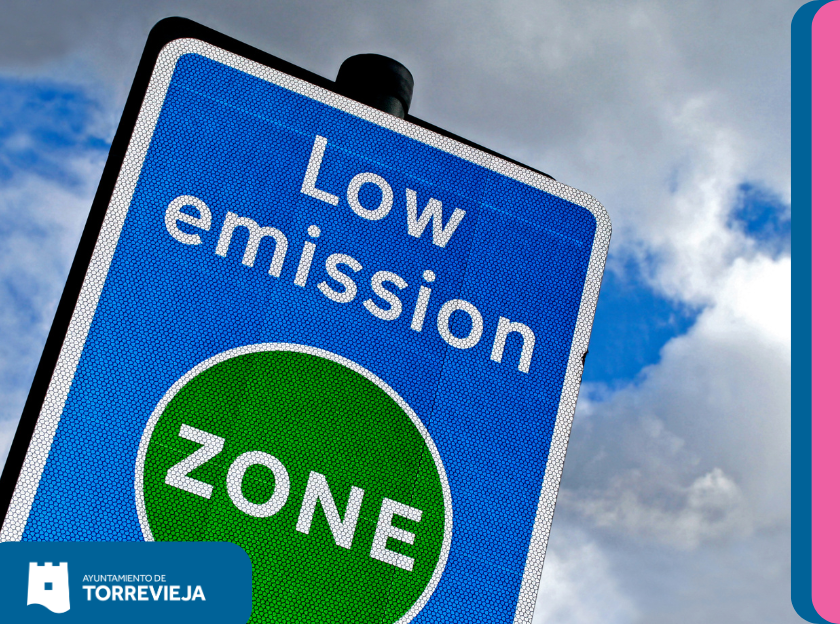
The project includes intelligent control systems, real-time environmental sensors, and a comprehensive technological platform over three years.
The Local Governing Board of the Torrevieja City Council has approved the awarding of the contract for the implementation of the Low Emission Zone (LEZ) and complementary actions, framed within Component 1 – Investment 1 of the Recovery, Transformation and Resilience Plan (PRTR), financed with European Next Generation-EU funds.
The contract has been awarded to the company ESTACIONAMIENTOS Y SERVICIOS, SAU for a total amount of 1,189,213 euros (VAT included), which represents an important step in the sustainable transformation of the city's urban mobility model.
A STRATEGIC ACTION TO TRANSFORM MOBILITY AND PROTECT PUBLIC HEALTH
The project's main objective is the creation of a Low Emission Zone that will allow for the progressive regulation of vehicle access to the city center, reducing polluting emissions and promoting a healthier, safer and more sustainable environment.
As stated in the technical report, this action responds to the need to adapt the city to state and European regulations on climate change, as well as to the specific reality of Torrevieja, marked by a high density of traffic and strong tourist pressure.
A comprehensive technological system with intelligent control and real-time data
The implementation of the LEZ will include a complete technological deployment that will allow the control, management and monitoring of traffic and environmental quality in real time.
The main highlights include:
-Installation of license plate recognition (LPR) cameras for access control.
-Implementation of environmental sensors to measure pollutants such as NO₂, PM₂.₅, PM₁₀, CO or SO₂, as well as noise levels.
-Development of a comprehensive management platform that will allow real-time data visualization, generate alerts and facilitate decision-making.
-Creation of an operational control center and a mobile application for management and communication with citizens.
-Implementation of specific signage and public information campaigns.
In addition, a fixed air quality monitoring station and several multiparameter sensors will be installed strategically throughout the city.
TWO IMPLEMENTATION PHASES
The Low Emission Zone will be developed in two distinct phases, taking into account traffic density, environmental sensitivity and urban functionality criteria:
First phase: focused on the urban commercial core, with 13 controlled access points.
- North: San Pascual Street.
- South: Vistalegre Promenade, Liberty Promenade and Juan Aparicio Promenade
- East: Patricio Zammit Street.
- West: Faleria Avenue and Orihuela Street.
Second phase: expansion to a perimeter ring that covers the rest of the urban area, with 26 additional access points.
- North: Bilbao Street, Santa Trinidad Street, San José Street and Maestro Francisco Casanovas Street.
- South: Gregorio Marañón Avenue, San Pascual Street and Ramón y Cajal Street.
- East: María Gil Vallejo Street, Virgen de la Paloma Street and Orihuela Street.
- West: Villa de Madrid Street and Patricio Zammit Street.
In total, the system will have a control network that will allow for traffic management, reduce congestion, and improve air quality in the most sensitive areas of the city.
FAST EXECUTION AND TECHNICAL IMPROVEMENTS OFFERED
The contract includes an initial execution phase of a maximum of 15 weeks, which may be reduced thanks to the improvement presented by the winning company, which has offered to shorten the deadlines by four weeks.
The winning bidder has also included significant improvements such as:
-Reduction of incident response time by 50%.
-Expansion of the technical training program to 20 hours, reinforcing the training of municipal staff.
THREE YEARS OF MAINTENANCE WITH AN ADVANCED TECHNOLOGICAL MODEL
Following the implementation phase, the contract includes a three-year period of comprehensive service, under a SaaS (Software as a Service) model, which will guarantee:
-Preventive and corrective maintenance.
-Continuous system monitoring.
-Connectivity and cloud infrastructure.
-Specialized technical support and constant technological updates.
This model will allow the City Council to have a flexible, efficient tool adapted to the evolution of urban needs.
A KEY INVESTMENT FOR THE SUSTAINABLE FUTURE OF TORREVIEJA
This action is part of the municipal strategy to move towards a more sustainable, digital and environmentally friendly city, aligned with European ecological transition objectives.
The implementation of the Low Emission Zone also represents a decisive step towards recovering public space, promoting sustainable mobility and improving the quality of life of citizens, consolidating Torrevieja as a municipality committed to innovation and responsible urban development.