Imagen

Torrevieja becomes a pilot municipality in the Valencian Community for the prevention of addictions in the leisure sector
It will be the first city in the Valencian Community to implement the PAO Guide, a program funded by the National Drug Plan that is already being developed in different Spanish municipalities.
02.06.2026
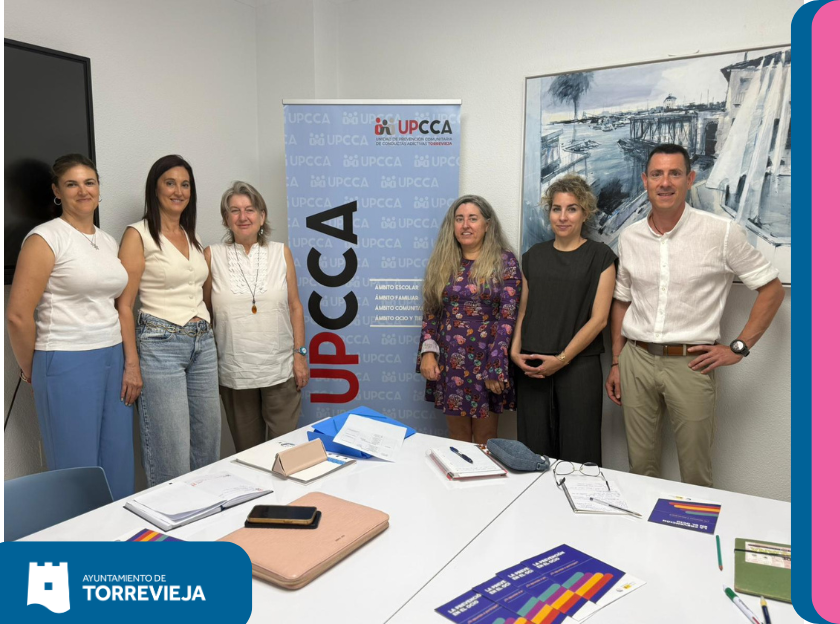
The City Council is launching a participatory process to design preventative strategies based on scientific evidence and the involvement of civil society. The initiative, promoted by the Department of Public Health and the UPCCA (Unit for the Prevention and Control of Addictions), will allow for a shared diagnosis of the risks associated with leisure activities and strengthen the community prevention network.
The Torrevieja City Council has taken a new step in its commitment to promoting healthy lifestyle habits and preventing risky behaviors among the population, especially young people, with the start of a participatory process for the prevention of addictions in the leisure field.
The initiative was defined after the meeting held between the Councillor for Public Health, Rosa Cañón, technicians from the Community Prevention Unit of Addictive Behaviors (UPCCA) of Torrevieja and representatives of the IREFREA team (European Institute of Studies in Prevention), a national and international reference entity in research and prevention of addictive behaviors.
As a result of this meeting, an agreement has been reached to implement the PAO Guide (Prevention of Addictions in Leisure) in the city, a tool that promotes preventive interventions from a community, participatory and evidence-based perspective.
A SHARED DIAGNOSIS FOR MORE EFFECTIVE ACTION
The project's main objective is to launch a process of social participation that will allow for a more precise understanding of the local reality related to addictions and leisure environments. To this end, the project will rely on the active involvement of associations, social organizations, youth groups, professionals, families, and community agents, who will contribute to developing a shared diagnosis of the situation.
This work will allow us to identify needs, detect risk and protective factors, and design future preventative strategies tailored to the specific circumstances of Torrevieja. Furthermore, it aims to establish a stable network of collaboration between government agencies, professionals, and civil society to ensure the continuity and effectiveness of actions undertaken in the coming years.
COMMUNITY AND ENVIRONMENTAL PREVENTION
The PAO Guide methodology focuses on prevention that goes beyond traditional information actions, incorporating community and environmental measures capable of generating positive changes in leisure spaces and dynamics.
The program's approach is based on scientific evidence accumulated over years by experts in addiction prevention and promotes the shared responsibility of all actors involved in building healthier, safer, and more inclusive environments.
The Department of Public Health emphasizes that this model will allow progress towards more effective, accessible and participatory prevention, involving the entire community in the search for shared solutions.
TORREVIEJA, A REFERENCE IN THE VALENCIAN COMMUNITY
The PAO Guide is currently being developed thanks to funding from the General Directorate of the National Drug Plan (PNSD) and already has experience in different municipalities of the Balearic Islands, Andalusia and Castile and León.
Torrevieja's inclusion in the program represents an important recognition of the work the city has been doing in the area of health prevention and promotion, as it will become a pilot project for the future implementation of this model in other municipalities of the Valencian Community.
Addiction prevention doesn't begin when the problem arises, but much earlier: in a city's ability to listen, engage, and build community. With this project, Torrevieja is taking a decisive step toward transforming its leisure spaces into healthier and safer environments, demonstrating that the best tools against addiction remain participation, education, and shared responsibility.